|
|

|
|||

|
Client Update - quarterly newsletter |
|
|
|
CFO Service; and Professional Tax Preparation and Advisory service, for 300 Owner-Operators of Trucks, Passenger Vehicles, Tire & Mechanic Shops; and Workers of the MTA, Sanitation, Metro-North, CSX Rail, & LIRR (CDL; MC DOT; T&LC).
(Plus vehicle tax preparation checklist)
Starting January 22, 2026 the IRS will accept 2025 Business Tax Returns. A Corporation is required to file a Tax Return every year, whether or not it had Income during the year (IRC Section 6012). Federal Residential/HOME Solar Energy Credit is 30% of the installation cost. Give us the contract that you signed with the contractor. Thanks for logging-on to this webpage to get DETAIL and RELIABLE information that you need to operate your trucks efficiently and profitable. We are READY to ROLL HARD with you. ***NOTE:- The "NO TOUCH LAW" takes effect on June 05, 2025. The fine is $40-$400 if you are caught on your phone while you are driving on the road. ***MONSTER TRUCK:- The 3 most powerful trucks are - Kenworth W990, 565HP; Mrecedes Benz Acros, 625HP; and Volvo FH16, 750HP.
***LUXURY CONDOS ON WHEELS (Comfort With Style):- #1) KENWORTH W900L 2024 - ($450K-$500K); #2) PETERBILT 389 TRIPLE SEVEN - ($400K-450K); #3) VOLVO VNL EXPEDITION - ($360K)
***THREE BIGGEST TRUCK STOPS:- #1) IOWA80 (Walcott, Iowa), WEBSITE:- Iowa80TruckStop.com. TEL#(563-284-6961. #2) KENLY95 (N. Carolina), WEBSITE:- Kenly95.com. TEL# (919)284-5121 #3) JUBITZ (Portland, Oregon), WEBSITE:- Jubitz.com. TEL# (503)283-1111.
We have worked with over 300 Truck Owners and people who are employed in the Transportation Industry. They are located in NY, NJ, CT, GA, PA, FL, TX, NC and CA. We are PROFICIENT at meeting clients expectation; and we have DELIVERED exceptional RESULTS everytime. WE HAVE THEIR BACK. We are READY to work with you if EXCEPTIONAL Results, and Peace-of-Mind, are IMPORTANT to you.
What We Are Doing For Our Clients 1) This Company Prepare and File their tax returns on time and saved them over $450 miillions in Taxes and Recurring Expenses/Expenditures. Hence, they have more LIQUIDITY (Cash-Flow, Disposable Income, and Working Capital) that enabled them to maintain their Business Financial Obligations and Credit-worthiness with Lenders and Suppliers. 2) Answer their questions about Taxation, Insurance, Supply Chain Logistics, Load-board, Freight Brokerage, Factoring, Accounts Receivable Collections, Occupational Safety, etc. 3) We know their industry BENCHMARKS; and we help them Overcome/Adapt to Financial, Economic, and Logistical Challenges/Hurdles. 4) Resolve IRS and State Audit expeditiously. 5) Refer new truck owners to TOP Freight Brokers and Trucking Companies, as a KICK-START / JUMP-START / BOOSTER / SPRING-BOARD / BREAK-THROUGH to move them forward. However, they must develope/build a reputation for being RELIABLE and for DELIVERING the cargo on TIME. (UPWARD MOBILITY). What do you want us to do for you TODAY? We are going FULL-TROTTLE. Lets ROLL!" Testimonials from our clients survey are on the middle of this page.
Jobs for OD's, OTR's, SEMI's and Support #1)Trucking Logistics to optimize Efficiency & Profit (A) Load Boards; and Freight Brokers.(You can look at the load board and Negotiate rates and routes with a Freight Broker). OR you can haul load/freight for a company with authorization from its Dispatcher. (B) Dispatchers:- (Approving Schedules, Assigning Drivers, Authorizing Routes; Checking Delivery Windows; Back-up Schedules; Assuring Contengencies Hubs are available; and Overhauling the Performance Metrics.
#2) Make Profit the Smart Way. a) Start with the Rate Per Mile on each Lane. b) The Fuel Cost to ravel to the destination. c) The Distance where you will get another Load. d) Consider WIDE-LOADING your hauling. e) Your level of hustle will determine your salary. There is NO limit. f) Make a Plan / BUDGET to manage your INCOME & EPENSES. BUDGETING is for your FINANCIAL Protection and Stability. You deserve Financial Stability, not Struggle.
(Top Trucking Companies are hiring ):- Landstar(800) 872-9400; Coyote(877) 626-9683; Robinson(855) 229-6128; Schneider (800) 558-6767; Old Dominion(800) 235-5569; Echo(800) 354-7993; JB Hunt(877) 791-9458; Knight (877)403-4029; Mode(800) 434-8881; Swift(877) 497-8971; GlobalTranz (866) 275-1407. We help truckers overcome key logistical hurdles. IRS Late Filing Penalty is $210 per month (IRC section 6699(a)(1). The IRS number is (800) 829-1040 and (800) 829-4933, from 7:00am Eastern Standard Time(EST). The website is IRS.GOV. You can file extension form 7004 for a corporation. **TAX TIPS:-Up to 25% of your Business Income is TAX FREE (IRC 199A). Business Travel - $0.67cents/ml; Per Diem $79/day, and Section 179 Expenses Deduction Up to $1,080,000 for Heavy Trucks; and a Deduction of $11,200 for Passenger Autos., Light Trucks, and Vans. Those deductions are in ADDITION to your Operating Expense Deductions(IRC-162, 179, 212, etc deductions). Hence, more disposable income in your pocket. Also, get up to $7,500 Federal Tax Credit if you purchase a New Electric Truck.
GIVE US YOUR TAX INFORMATION:-We prepare PRESENT and PRIOR years Tax Returns for over 300 TRUCKERS and other Taxpayers that are employed in this industry. Our clients are located in NY, CT, GA, PA, FL, TX, NC and CA. Some Truckers bring their documents to us and some of them pay their CHOICE of Courier(UPS; DHL; FedEx; Post-Office) and send us their ORIGINAL documents. We give them UP to $30 CREDIT for postage; and we PAY the POST-OFFICE a REGULAR POSTAGE RATE to deliver ALL their documents and a copy of the TAX RETURN that we PREPARED for them. The TURN-AROUND TIME to PREPARE A TAX RETURN is 3-5 DAY AFTER we received ALL their documents
THE FEE / PRICE:-The FEE to prepare an INDIVIDUAL Tax return STARTS at $400; and a BUSINESS Tax Return cost a MINIMUM of $1,275.00. That is an affordable price that DOESNT squeeze the CASH-FLOW in a Company that has Budgetary Constraints. The fee is TAX DEDUCTIBLE. In addition, it is an INVESTMENT they make to MINIMIZE their tax liability and keep more CASH-FLOW and WORKING CAPITAL in their Business Account to manage OPERATING EXPENSES, and Improve their CREDIT-WORTHINESS and BUSINESS VALUATION. Hence, they get EXCEPTIONAL RESULTS and PEACE-OF-MIND; and they have NOTHING to lose. Testimonials that we have received during our annual Truck-owners survey are overwhelmingly impressive.-(SEE TESTIMONIALS BELOW).
***TAX UPDATES:-Our CONTINUALLY Updated Tax DATABASE contains over 1,000 Tax Strategies that are unique to your industry. It enables us to use the BEST Tax-Efficient Structure (Proactive Tax Strategies) that will MINIMIZE your Tax Liability; and MAXAMIZE your Cash-flow and Disposable Income without raising a red flag. Hence, our clients have never been audited by the IRS or State.
The Corporate Transparency Act. A Coeporation Tax Return MUST reach the IRS ans STATE(S) on or before MARCH 15(IRC Section 6072) and avoid paying a late filing of $245 to the IRS and $200 to each State PER MONTH. The IRS (800)829-1040 and (800)829-4933 from 7:00am EST. The werbsite address is IRS.GOV. **NOTE:-Accounts Receivable Collection (We can collect money from people that owe your company money and refused to pay you. Give us the contract(s) that you had signed with each deadbeat.
Lets get to the specifics!! Money is Wealth and Power. It also brings Financial Freedom, Happiness, and a lot of Friends. We keep up with current developments in this industry, and we will use every Regulatory Tax Loophole to help you keep more of your money; and we will put a BIG smile on your face. We dont rely on simplistic rules of thumb scenarios and abstract concepts to solve Transportation Tax Problems. Our methodology is factually-deep and effective. We ensure every Tax Assignment is completed Quickly, Efficiently, and Accurately. Truck-Owners get Great results and Peace-of-mind. *Tax Codes we use:-(Costs Segregation Analysis) 61, 63, 67, 162, 167, 179, 197, 199A, 212, 263, 274, 280, 351, 382(NOL calculations, limitations, and carry forward), 441-446, 704(b), 754, 761, 945-948, 3402, 6072, 6662, 6695, etc.); Plus IRS 48 hours of Mandatory Annual Continuing Education. *Tax Research Companies we use:-Thompson Reuters; Prentice-Hall; RIA; WG&L; BNA; and CCH. They are the best/legendary; and they are use by IRS Auditors. Hence, you are in capable hands with us.
Services We Provide Fleet, SEMIs, ODs, and OTRs. #1)Tax Planning (preparing for unforeseen contingences, including the tax aspects of Marriage, Separation and Divorce). #2)Federal, Single-State and Multiple-State Tax Preparation (Including State Tax Credit; etc.). #3) IRS & States Tax Problem Resolution (Payroll tax audit; Prior years tax owed; Failure to Reply/Comply; Wage garnishment; Innocent spouse; Collection appeals; Penalty abatement; Bankruptcy filing; Omission of Income; Delinquent child Support; Delinquent Student Loan, etc.). #4)Personal and Business Financial Planning. #5)Book-keeping; Business Loans Application; Fianacial Statements; and Business Valuation. #6) Insurance, Investments, and Risks Management Advisory. #7) New Business, Franchise, and Real-Estate Advisory (Business Model, Proof of Concept; Buy; Lease; Lease-Option; Sell; and Inheritance/Succession).
Who Are Our Clients:- They are Truck-Owners, Transit/Railroad Employees, C-Corp., S-Corp., LLC., and Sole-Props (IRC Sections 351, 441-446, 761, etc). SOME of them are NEW clients and SOME of them have been our clients for MANY years. We are quite familiar with the Industry Standards and Practices, and the New Tax Breaks, including the PER DIEM allowances, Major Repair allowance, Operating Deductions, Tax Credits, Bonus Depreciation, Carryovers, etc for Fleet and Owner Driver, in accordance with IRS and DOT rules. We help clients pay LESS tax and keep MORE money in their pockets. We put our Track-Record and Reputation behind everything we do. You have a lot of work to get done. Lets start today!!! Federal and Single-State, or Federal and Multi-StateTax Returns are completed Quickly, Efficiently, and Accurately. The turn-around time is usually 1-5 days. SOME transport clients Fax their documents to us.SOME of them send us their documents by UPS, DHL, FedEx, and Post Office. We reimburse them up to $30 for their mailing expense. They are:- 1) Taxi & Limousine companies (Uber, Unter, Lyft, Juno, Communicar, Green Cab, etc.) 6)Workers/Empoyees of Metro-North, Sanitation, and CSX Rail. - 401(k) and 457(b) plan. ****NOTE:- For employment at Amtrack, the MTA and the Post Office:- apply on these websites:-Careers.Amtrack.com; NewYorkJobDepartment.com; and USPS.MyJobsCorner.com. How We Obtain New Transportation Clients:- Direct mailing from our exclusive Database; States Department of Corporation Registry; Truckers searching on Google and other Search engines; YouTube Truckers Group Discussions; and having promotional items distributed at Truck Shows, Truck Stops, and Dispatch Terminals. What We Want From Transport Workers/Employees, Companies, and Owner Operators #1) Your Cell Phone number and E-mail address for quick communication. #3) A copy of your Drivers License or State ID; AND a copy of your spouse Drivers License or Stste ID. (IRS & States needs this information on ALL Tax Returns to help deter Identity Theft).- IRS (800) 829-1040 from 7am EST. #4)Give us those letters you received from the IRS and States, including the letter you received from the IRS with the IP PIN number that was assigned to you to put on your tax return(Identity Protection Personal Inentification Number). #5) Form 1095-A, B or C (The Affordable Care Act) for Medical Insurance you paid for yourself and your family members (IRS Requirement). - IRC Sectios 6051. #6) Form(s) W2 from your employer. #8) Copy of Birth certificate and Social Security Card for each dependent you are claiming; and information from Day Care or Baby-Sitter you paid #9) Forms W-2G gambling winnings from Casinos, State Lottery, Horse Racing, etc; and Forms 1098-T for College Tuition you paid. #10) Forms 1099 for Unemployment, Social Security, Pension, and Disability Income received; AND Forms 1099 from your Bank and Stock Broker for Savings Interest and Dividends you received; and Stocks and Bonds Sold during the year. #11) If you own a Private House, Vacation Home, and Time-Share, we need the Mortgage Interest; Real Estate Tax; School Tax; Community Tax; Village Tax; Town Tax; Sales Tax for Boat & Automobile you purchase; and Home-Owners Association Dues(HOA) you paid on each property. #12) If you own a Condo or Co-op., We need the Mortgage Interest you paid your Bank; PLUS the Letter/Statement that you received from your Condo Board or Co-op Association that shows the number of shares you own(Co-op) and Mortgage Interest and Real Estate Tax you pay from the maintenance fee you paid during the year. #13) If you own Rental Property, we need the Rental Income; Property Tax; Home Owners Insurance; Mortgage Insurance; Mortgage Interest; Property Tax; and ALL Expenses you pay to operate each rental property you own during the year. #14) An analysis of your Business Expenses (IRC Sections 67, 162, 167, 179, 197, 212, 263, 274, 280, 945-948, 3402, etc) for the tax year. If you are an Owner Operator we would add your DOT and IRS per diem for incidental expenses. #15)Your Credit Card or Bank Account Information to pay for the service. Transportation Related Education *Travel Institute, New York (Air, Road, Rail, & Sea). * Brooke Transportation Training Solutions, Texas (Trucking). * M.S. Taxation; and IRS Enrolled Agent - since 1989. *IRS 48 Hours of Mandatory Annual Continuing Education. * MBA Business Management. * Insurance Broker (property & casualty). *Real-Estate Salesperson & Broker Certificates. *Accounts Receivable Collections.(Dunn & Bradstreet). *Member, the American Trucking Association (ATA).-Since 2008.
Question:- I can tell you guys know this business. However, is there something specific that you can tell us that will convince us that you really care and we can trust you?"-Ricky, T. (Springfield, Oregon). Answer:-Ricky, we are proficient with meeting Clients expectation. We can steer your business operations and your tax returns successfully out of the intricate network of Federal and States tax codes, tax rules, and tax practices & procedures. With us in your corner, you will ALWAYS have a RELIABLE and VALUABLE resource to help your business accomplish its goals, in a similar manner to the way your drivers steer your trucks safely over Frozen Lakes, Ice Roads, Down Slippery Slopes, Around Precipices; and Around Mountainous and Rugged Terrains. How about that, Ricky? Are you finally convinced that we really care and you can trust us? Are you READY to do business with us?
Starting a Trucking Business. You are entering a large/big industry. Truck companies are the biggest/largest employer in some states. Some truck companies are classified as fortune 100 and 500 companies. They can hire you to work for them; and they can help you buy or lease trucks if you choose to work independently and haul freight for them. Fuel and Insurance are the biggest operating expenses. It is very important that ODs know their COST per MILE before they agree to move load/Freight to specified destinations. Your COST per MILE can change with the kind/type of terrain and fuel consumption (Flat roads, Rugged roads, Hills, Mountainous, etc.). ***VERY IMPORTANT:-You can take a load that is a little above your cost per mile if the second load that you will carry back or carry forward will compensate for the money you lose on the first load (you lose a little on one load and you gain on the other loads). That is An IMPORTANT and a SENSIBLE business decision that every Truck Owner must make WISELY, especially if you have a Strong Business Relationship; OR if you want to ESTABLISH a Strong Business Realationship and get PREFERENTIAL treatment from your Freight Broker; and you want to PROFIT from that relationship in the LONG TERM. Let/allow common sense to prevail. #1) U.S. Dept. of Transportation(DOT):-If you are starting a Trucking Business, Get Registered. Log on this website (www.Transportation.gov), and get important government transportation information about CDL permit, MC, DOT, FMCSA, etc. You can call FMCSA (Federal Motor Carrier Safety Administration) directly (800) 832-5660. Some Freight Brokers will help you get training and registered; and help you locate trucks that you want to buy or lease. #2) Top 12 Freight Brokers with Logistic Superiority:- ODs with MC, DOT and ready to move Steady/Consistent load/Freight call:- Worldwide Express (610) 521-5450; Mode (800)434-8881; Knight(877)403-4029; Global Tranz(866)275-1407; TQL(800)580-3101; Panther (866) 303-7447; Swift(877) 497-8971; JB Hunt(877) 791-9458; Landstar(800) 872-9400; C.H. Robinson(855) 229-6128; Echo Global Logistics(800) 354-7993; Coyote Logistics(877) 626-9683. #3) Top Freight-Bill Factoring Companies:- Get paid within 24 hours. Money in circulation keeps the economy rolling. If you need Cash Advance for your Invoices; or if you need a Fuel Card to save on Fuel cost, call "DAT Freight Factoring" (800) 551-8847. www.DAT.com; OR "Aero-Fund Financial" (800)747-4234. www.AeroFund.com; OR "Cashway Funding" (888) 752-1443. www.CashWayFunding.com. #4) File Your Fuel Tax Reports:- IFTA-100, Form 2290 and Form 903. Call "Permits Plus", (877) 722-8059. website www.PermitsPlus.com.; OR Call "Express Truck Tax" (704) 234-6005. www.ExpressTruckTax.com. #5) Emergency Roadside Service-24/7:-(Serving, ODs, OOs, MC, Insurance companies, Dealerships, Finance Companies, and Load Boards anywhere in the USA and Canada):- *National Truck - (833) 387-1674 www.NationalTruckService.com. *RoadSide Masters - (888)381-7438 www.RoadSideMasters.com. ***NOTE:- If you own a Mechanic Shop or Tire/Tyre Shop, you should consider obtaining Emergency Outsource Road-side Work in your city/state from those two Emergency Roadside Service companies. Call them and established a working relationship with them.
Questions & Answers #1) Question:-I bought a Mark truck and I formed an LLC. I leased the truck to a company that moves load for shippers. The company hires and pays the driver; and pays all the operating expenses, and sends me a check every week. I want to file my tax return. Can you help me? - Jane, K, Dallas, TX. Answer:-I am familiar with your situation. I can help you if the company sends you a Form 1099 that shows the total amount of income that it paid you. OR, give me your bank statements that show every deposit the company had PAID into your LLC Bank Account or into your Personal Bank Account.
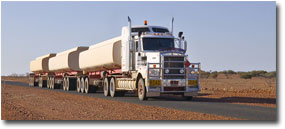
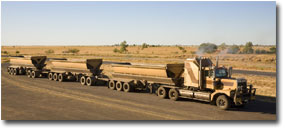
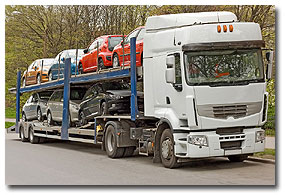
Truckers Testimonials from our truckers survey report ***NOTE:- You DONT have to believe whatever they are saying. EXPERIENCE it for YOURSELF. Call us today; and start doing business with us. Thank you! #1) "I own a trucking company and I was searching the internet for a taxman. I got a link that leads me to Barrys Accounting Services. I contacted Barry and he wasted no time getting me to talked to the owners of 4 truck companies who are happy with his service. I am happy I hired him. The result was better than I had anticipated".-Jimmy, P. (Brooklyn, NY). #2) "I own 2 trucks and 3 rental properties. I also trade stocks on the market. Barry has helped me saved a lot of money. I am not going anywhere else". Thanks, Barry-Eugene Kelley (Queens, NY). #3)"BIG MISTAKE!! I paid a lot of income taxes because I allowed the people that filed my truck fuel tax reports to prepare my business tax returns. I am looking at the e-mail you sent me and I cant believe how much money you saved me.Wow!!-Eva Jordon ( Atlanta, GA). #4) "Thanks for the information and the encouragement you gave me. I reached out to Landstar and Coyote; and I am busy now. Its crazy how quickly things have turned around for me. My goal/plan is to NET $2,800-$3,000 weekly for the next 45 weeks. I respect the grind. However, I am saving to invest in rental properties. I will see you tax time - Will Anderson (Edison, N.J). #5) "Keep on posting those jobs. Those connections are good. I am hauling for Swift and Global Tranz. I choose to work Regional and be away from my family 1-3 days per week. I earn $1,500-$2,500/wk. Spending time with family is important to me. -Fred Anderson (Bronx, NY). #6) "The Bookkeeper in my Freight Broker office files my truck fuel tax forms. I was told by my friend that works for a trucking company that I must file my business tax return with the help of an accountant that knows the trucking business. Through another friend, I contacted Barry; and he has been my taxman for over 18 years. He saves me a lot of money that I would have had to pay in taxes. He knows this business; and he is very resourceful in other industries".-Greg McNilley, (Carlsbad, CA). #7) "The information you have given us is invaluable. We have leased a fleet of trucks and the leasing company has encouraged us to retain your services."- Allan & Tom, Shippers & Movers, (Randall Ave., Bronx, New York). #8) "I am an OD/OO. I am on the road and could hardly find time to go to a tax office and get my taxes done. I send my information to Barry and he gets the job done. The results have always been better than I had expected. It has been this way for 15-years. Great guy!!" - Jerome Jenkings, (Clear Water, Florida). Types of Hauls (local & regional):- Specific kinds of trucks are used after the Shippers Cargo and Transportation needs are identified (FTL, LTL, 3PL); and Distance(Short, Intermediate, or Long haul) is calculated. Hauls can be Hazardous Material(haz-mat), Refrigerated Cargo(Reefer); Concrete Mix; DryVan; FlatBed; Tanker; Heavy Haul; Intermodel; Container Transport; Ice Road(delivery over frozen lakes), Automobile; Oilfield; Private Sanitation, Heavy-duty towing; etc. Hauls can be EXPRESS or TEAM on Dedicated lines; or Consistent loads of a variety of freight on the same routes from a Nationwide Network. RATES can be 52 to 60 CPM; PLUS Compliance Bonus for ON-TIME DELIVERIES; OR (27% of line haul + Safe driver bonus + Transition Bonus + On-time delivery pay + Referal bonus +Tarp & Stop-Off pay). Box Trucks, Tractors, and Semi (70 to 220 gals fuel tanks and up to 450 HP):-Peterbilt, Mack, Kenworth, GMC General, Freightliner, International, Norstar, Cummins, Leyland, Western Star, Workhorse, Volvo, Mercedes, etc.
Types of Trailers:- Step deck, Drop deck, Double drop deck, Removable gooseneck, and Flatbed. Call "Heavy Haulers" (800)908-6206. www.HeavyHaulers.com People in various industries would refer to the trucking industry by different names, such as Inland Freight, Interstate Commerce, or Inland Marine. The cars we drive are brought to the dealers by trucks. Heavy equipment (tractors, bulldozers, cranes, etc.) to build roads, buildings and highways are brought to the construction site by trucks. The items that we purchase at the supermarkets and neighborhood shops are transported there by trucks. This includes lumber and hardware materials; and pipes used in the transportation of petroleum, water, and natural gas. In some states trucking companies are the biggest employers. Fuel price and fuel surcharge do have an effect on the industry. However, the industry will continue to dominate freight movement and the national economy as more fuel efficient trucks are being manufactured annually. There were over 120 million REGISTERED trucks including 1.95 million REGISTERED tractor trailers on the road in 2018, according to the Federal Highway Administration (FHA) statistics.
When my Trucking clients ask me how much insurance coverage I would consider adequate to cover their exposure, I often tell them to look at their net worth on their business or personal financial statements because that is what is at risk in the event they incur a catastrophic loss, including the verdict from possible lawsuits. The coverages I recommend are auto liability, physical damage, motor truck cargo, trailer interchange/drop lot, general liability, excess auto liability/umbrella, workers compensation, occupational accident & health (OA&H), and pollution coverage. Auto Liability Coverage
Trailer Interchange/Drop Lots Pollution Insurance
"What is the typical cost range including operating costs for a new or used tractor/trailer, and whats the average life span?"-Karen. D, Houston, TX. Answer Fuel can cost you about $65K (20K gals) depending on your route and how long your truck runs. Group Insurance $10K; maintenance $5K-15K annually, for a new or used the tractor & trailer. Front tires $1,000 each and rear tires $400 each. The life span can run up to 5-years before major repairs are needed. It depends upon the kind of operations that you are involved with (trade cycle, warranty and depreciation schedule) and the annual mileage that you are covering. Everything must be factored into the kind and scope of your maintenance schedule. Steven Transportation, Swift Logistics and other Trucking Companies that I mentioned above replace their fleet continuously. You may be able to purchase a high quality pre-owned truck from those companies. If you want to buy new trucks and trailers, your best bet is to attend the Mid-America Truck show, the Mid-West Truck show, or the Great American Trucking Show in Dallas, TX; and dont be afraid to ask questions. Those shows offer everything that you can think about in the trucking/transportation industry. #2)E-mail Received "I am a class "A" OTR with haz-mat and tank endorsements. I have been working for companies for 13 years. I am starting my company as an O/O and I will be soliciting freight from Brokers whom I have built a relationship with over the years. I am offered a pre-owned, well-maintained 18-wheeler, 2005 Ken worth T-2000 with 400,000 miles. The truck cost $62,500, 9.5%, five years. Trailer $25,500, 6%, three years. I plan to be on the road for nine months a year. Diesel 5.8 mls/gal.; tolls, registration, etc., $3,500. How much load do I have to haul to be able to break even in the first year?"— E. McAllister, Walnut, CA. Answer
|
|||||